
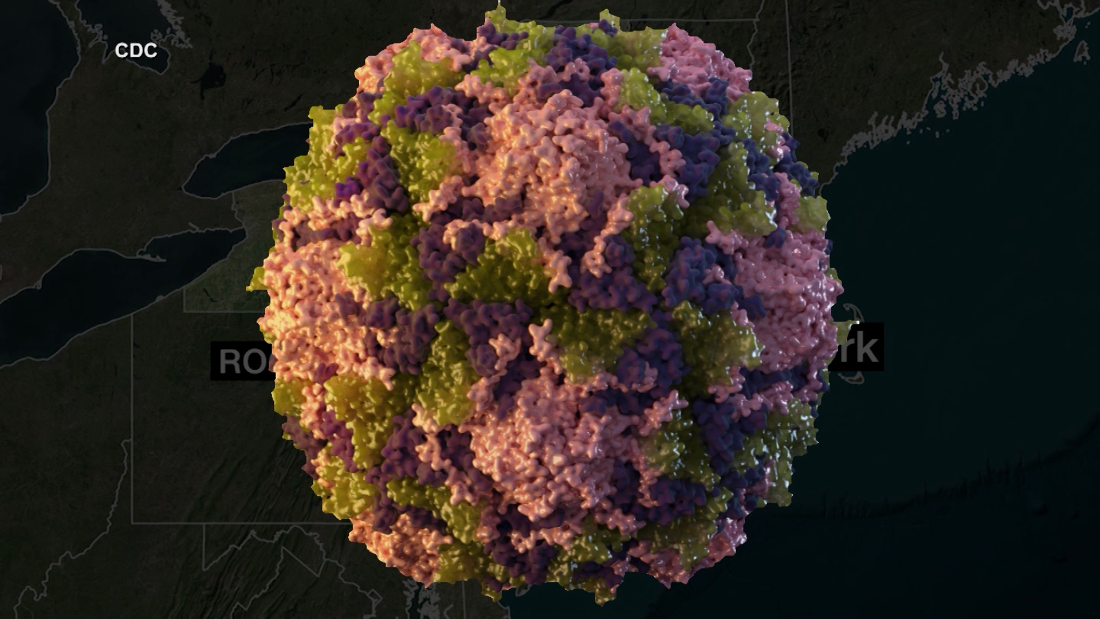
One case (and further evidence of sewage) may sound insignificant. According to the latest data from the US Centers for Disease Control and Prevention, more than 92% of U.S. children have been vaccinated against polio by the time she is two years old.
But there is reason for health officials to be alarmed by one case. Unvaccinated and unvaccinated people are at risk of severe disease, but the spread of the disease is unclear, in part because of a vaccine switch over 20 years ago.
Vaccinated persons are harmless to be infected with poliovirus, which spreads from the human intestinal tract via the fecal-oral route. A person picks up the stool germs and touches something or shakes hands with another person. Put your hands over your nose and mouth. This is why young children who are still wearing diapers are especially susceptible to infection.
Poliovirus infects cells in the intestine and can cause mild illnesses such as cramps, diarrhea, and constipation. But occasionally, the virus slips through the intestinal barrier and into the bloodstream, where it reaches motor neurons (cells that tell muscles to move) in the spinal cord. When a virus infects these cells, they are destroyed and people are paralyzed for life.
Doctors estimate that there is one case of paralytic polio for every 300 to 1,000 mild infections.
A tale of two vaccines
Until 2000, two vaccines were used to immunize Americans against polio. There are vaccine drops made from live, attenuated poliovirus (sometimes given with sugar cubes) and an injectable vaccine that uses dead poliovirus.
There are some important differences between vaccines, but the main difference is that oral vaccines induce so-called mucosal immunity, so if a vaccinated person is re-exposed to the poliovirus, copies of itself in the gut. cannot be created and passed to someone else.
However, the use of oral vaccines also has drawbacks.
“The big downside of the oral polio vaccine is that you flush it,” said Dr. James Campbell, a pediatrician and vaccine researcher at the Center for Vaccine Development and Global Health at the University of Maryland School of Medicine.
Very rarely, in 1 in 3 million doses, the attenuated virus in oral vaccines escapes the intestine and causes paralysis.

Weakened virus may also be shed in the faeces and, in rare cases, viruses that may mutate and cause paralysis, especially when the virus is transmitted in areas of poor sanitation and low vaccination coverage. It will return to shape.
Dr. William Schaffner, an infectious disease specialist at Vanderbilt University in Nashville, said:
This is what happened to young adults in New York. Genetic sequencing showed that the virus that paralyzed him came from an oral vaccine still in use in other countries.
An injected vaccine that uses a killed virus cannot revert to its harmful form. Oral vaccines are relatively safe, but injectable vaccines are even safer.
In 2000, public health officials decided that the United States should use only shots containing inactivated virus for polio vaccination.
Some vaccinated people may spread the virus
However, the use of injectable vaccines has drawbacks. It prevents paralysis, but not necessarily infection.

For this reason, young adults and children vaccinated after the switch may become infected with the poliovirus in the gut and shed the virus in the stool.
“They’re protected from paralytic disease, but they can still hide the virus and spread it to others. And that’s the situation we have in New York right now,” Schaffner says.
“So essentially the whole community could carry this virus up their gut, but they don’t even know it’s there.”
As long as the people around you are protected, Schaffner says, it shouldn’t be a big deal. But there are concerns that silent transmission could carry the virus into the pockets of people who have not been vaccinated against polio, with more serious consequences.
“In unvaccinated communities, especially if there are many unvaccinated people living in the same area, it gives the virus the opportunity to shed and more commonly spread from person to person.” says Campbell.
One group that may fall into the at-risk category is children. Usually a child gets her four polio vaccines before she turns 6 years old. At 2 months, at 4 months she will have her 3rd dose, from 6 months to 18 months she will have her 3rd dose, and from 4 years old she will have her 4th dose at 6 years old.
Schaffner says that children who have the latest vaccines but are not yet fully vaccinated may be at higher risk of contracting polio, but no one really knows.
“The answer, frankly, is that it is partially protected,” Schaffner said.
“It’s the full series that provides full protection,” he said. ”
call for more vaccinations
Officials in New York say vaccination for everyone is key to preventing the virus from disabling more Americans.
“Our single case of polio may be the tip of the iceberg.
“It only happens when people aren’t vaccinated,” he said.
Source: www.cnn.com

