
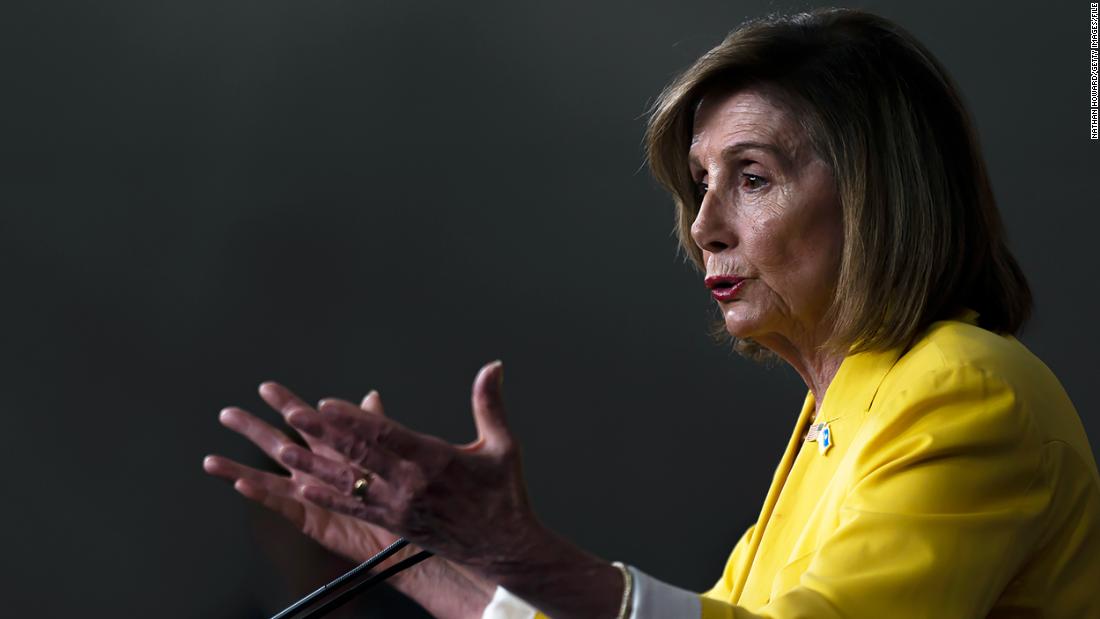
Meanwhile, China’s blistering warnings that California Democrats shouldn’t go and Washington’s vow to not be intimidated will see the wrath of political forces around the world manage the world’s most sensitive geopolitical duel. It shows that it can make things almost impossible.
Senior Taiwanese and U.S. officials told CNN on Monday that Pelosi will be visiting Taiwan for the first time as Speaker of the House in 25 years as part of a tour of Asia. Longtime critics of the Chinese Communist government and its alleged human rights abuses will arrive in Taipei despite unusual warnings from Beijing about retaliation and consequences.
With her position and the new situation created by President Xi Jinping’s nationalist rule, and Beijing’s new assertiveness and military and strategic power, this is the most dangerous brink for Taiwan in decades. increase.
Given the signs that Pelosi is determined to visit, the question is how Beijing will respond. Following a series of threats and propaganda that have raised hopes for its counterattack, most of its options are highly alarming. Most analysts believe that some sort of military show of force will likely take place at a time when China is already sending jets into Taiwan’s air defense identification zone in unprecedented numbers. China’s move may not directly threaten U.S. navies in the region, but it could increase the likelihood of miscalculations and increase prospects for how Taiwan will respond to serious provocations. There is also sexuality.
Why is Pelosi going?
So why is Mrs. Pelosi leaving and her visit unnecessarily hostile to China’s leadership?
Supporters of the visit include many Republicans, who are unusually in line behind Pelosi. It’s the way of life I’m trying to live.
But the controversy is not limited to Taiwan. This is about the broader context of China’s constructive challenge to America’s determination to maintain democracy, Western values, and military and economic superiority in the Pacific and around the world.
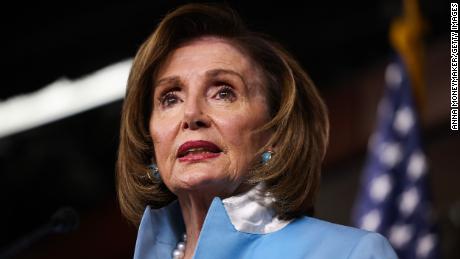
When news of Pelosi’s planned visit leaked, it became politically implausible, both domestically and for strategic reasons, to yield to Beijing’s warnings that Pelosi should not go. Giving up on her plans would be unpalatable for Pelosi, who has followed a political career partly defined by standing up to China. It would send the message that the United States, one of the first confrontations, would retreat.
Biden also had political considerations. Although he publicly admitted that the U.S. military was concerned about the visit, he could not openly side with China over Pelosi. Also, the president can hardly dictate to one of his top representatives in another agency what he should or shouldn’t do.
Politics are also pushing China’s actions
Politics is raging even within China’s Politburo, but many in the West often see China’s Communist Party leadership as a monolith. Xi has based his power on aggressive nationalism and the idea that Taiwan’s destiny is to “reunify” with the mainland. He is determined to preside over a national renaissance that will wipe out China’s past humiliation of colonialism and its long isolation of the 20th century, when it failed to wield what he sees as its legitimate influence in the world.
So Pelosi’s expected visit is much more than an attack on China. This is a personal disrespect for Xi’s core project by one of his top US politicians, and one that demands a political response.
The crisis also comes at a pivotal moment for Beijing. Xi Jinping, poised for an unusual third term in office in a few months, cannot afford to be seen as the underdog. And his government’s questionable handling of the Covid-19 pandemic (massive lockdowns are still common in Chinese cities) and a slowing economy have lured Xi into a nationalist position that hides domestic responsibilities. It means that there is a possibility that
long-running controversy
While the current stalemate is alarming, Taiwan has long been a catalyst for US-China relations. The controversy is further muddied by complex diplomatic agreements and subtle US strategic doctrine designed to avoid the possibility of war with China.
The island is considered by Beijing to be a legitimate part of its territory. The United States recognizes the mainland People’s Republic of China as the sole legitimate government of China and does not consider Taiwan a country. However, it does not allow the Chinese Communist Party to claim sovereignty over the democratic island. While providing Taiwan with a means of self-defense in the purchase of U.S.-made weapons, Washington will either defend Taiwan itself to discourage declaring independence from Taiwan and give Beijing’s leaders a second thought. adopted a policy of deliberate ambiguity about what Forcible takeover of the island.
Robert Daly, a former U.S. diplomat in Beijing, said on Monday that China’s eventual response, such as intruding into Taiwan’s airspace, would be unlikely to trigger a war but would push rivals closer to the danger zone.
Daly, director of the Wilson Center’s Kissinger Institute on China and the United States, told CNN’s Pamela Brown, “It will set a new baseline that brings us a little closer to the conflict.
“I don’t think we’ll be at odds this time, but I don’t think our relationship with Beijing will be any better a week from now,” he said.
Why Biden Worries About Travel
Mr. Biden has reshaped U.S. foreign policy on the principle of countering China’s growing power in Asia and beyond. Thirty years ago, Washington hoped that by bringing a then-isolated China into the global economy, it could promote political liberalization and channel it into a Western-oriented global economic and political system. But Beijing seeks to use its military and political power and influence to build alternative political and economic value systems to those represented by the United States and its allies.
But Biden also wants to manage this new rivalry to prevent war between a rising power in the Pacific (China) and an incumbent power (the United States) and its allies.
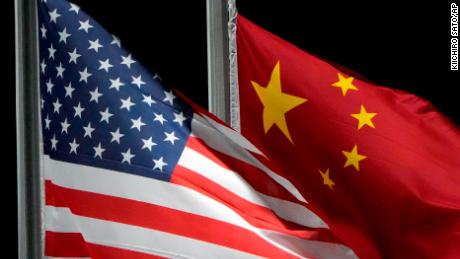
US leaders stressed in a phone call with President Xi last week that the basic nature of US-China relations and the White House’s position on Taiwan have not changed. But from Beijing’s point of view, Biden’s recent repeated statements that the United States defends Taiwan, all retracted by his aide, may have left the impression that he was not sincere.
China has also warned among hawks that Washington should supersede a policy of “strategic ambiguity” over US intentions if China invades Taiwan for a clear statement that the US will defend the islands. So, I’m keeping a close eye on the increasing movement of Congress.
Some analysts say such a change not only risks dragging the United States into a war in the Pacific against China, which Americans are unprepared for, but could also make Beijing even more aggressive. Alternatively, the United States’ promise of a shield could boost Taiwan’s independence, which would force China’s hand and lead to widespread military conflict over Taiwan.
Ahead of Pelosi’s expected visit, an official statement by an administration official confirmed no change in U.S. policy and the right to travel, but a difficult few weeks as China responds in some way. suggested that it could become
John Kirby, the strategic communications coordinator for the White House’s National Security Council, said in an appearance on CNN, “There is no reason for China’s rhetoric. There is no reason for any action. Congressional guidance.” It is not uncommon for people to travel to Taiwan.” “New Day” on Monday.
“We, as a nation, should not be intimidated by its rhetoric or potential actions.”
But in a new statement Monday, China’s ambassador to the United Nations, Zhang Jun, said China’s military would not “sit idle” when Pelosi visited and that her visit would have “a terrible political impact.” ‘, he warned again.
In Washington, it is assumed that Xi Jinping is less interested in direct military confrontation than Biden. However, he is stronger than previous Chinese leaders.There is also a strong nationalist streak in the Chinese military, along with growing confidence in its capabilities.
So speculating about how China will respond to Pelosi’s visit, based on its behavior when past crises have blown, could mean the United States faces an unpleasant surprise. there is.
Source: www.cnn.com

